Some of the best property opportunities aren't the properties that look most attractive when you first walk through the door.
Sometimes they're the worst property in one of the best locations.
That's exactly what attracted me to a run-down cottage in St Ives, Cornwall.
The property, then known as Lower Fawn, was old, damp and in need of significant work. But it was around ten yards from the beach, had gardens to the front and rear and sat in an area where property was both expensive and difficult to come by.
I wasn't looking at what the property was.
I was looking at what it could become.
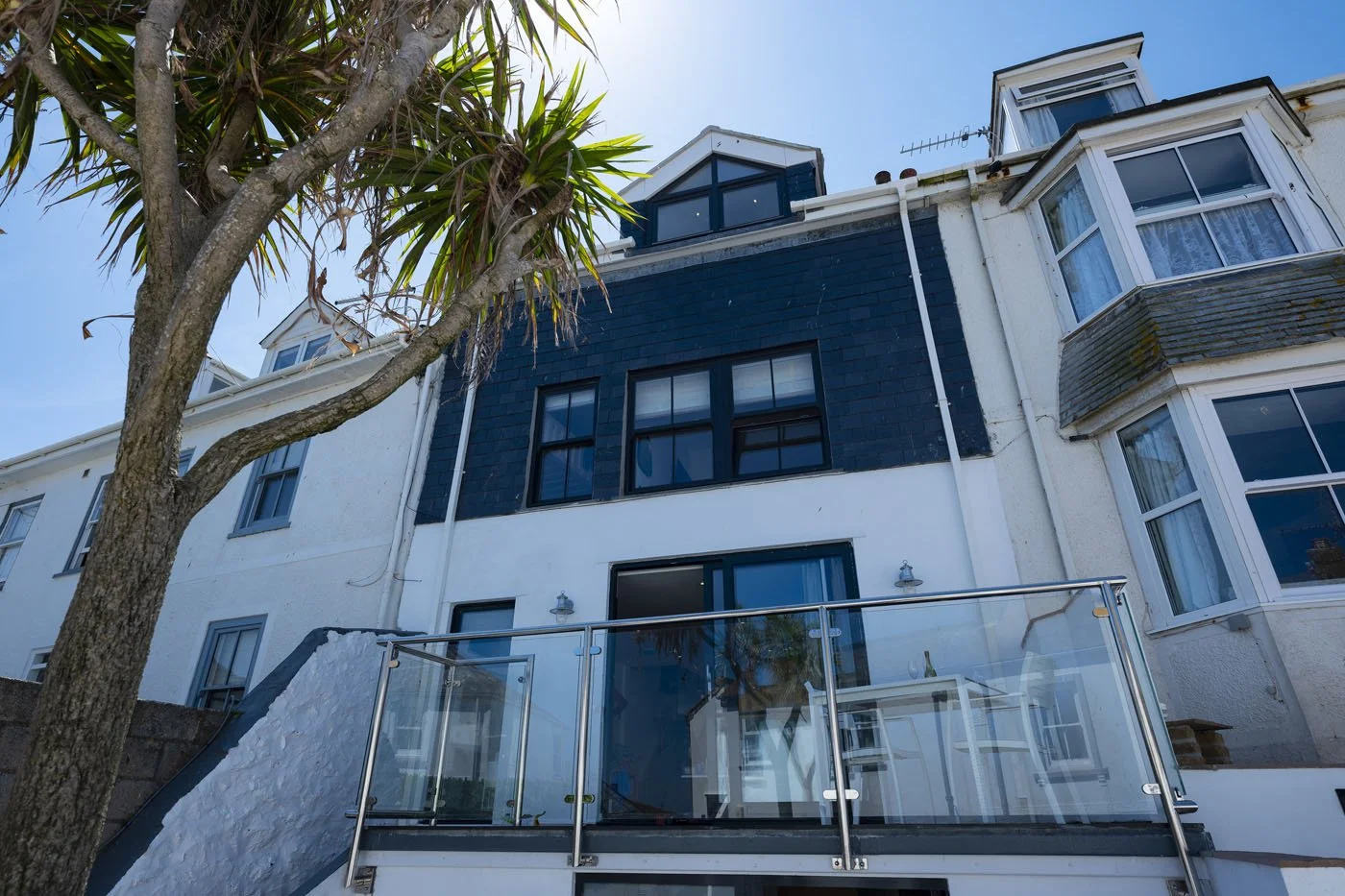
We bought it for £430,000. Over the next 18 months, including the planning process, we transformed the property, taking it from two storeys to four and creating a high-end home with a final Gross Development Value (GDV) of approximately £1.2 million.
It wasn't an easy project, and I made decisions along the way that I would approach differently today.
That's exactly why it's such a useful one to learn from.
Lesson 1: Look for the worst property in the right location
Location was fundamental to this investment.
St Ives was already a high-value property market, and opportunities in the area were limited.
The cottage itself was a different story.
It was old, decrepit and had significant damp issues. To many buyers, those would have been reasons to walk away.
To me, they represented an opportunity.
The problems with the building could potentially be fixed. What couldn't be recreated was its position around ten yards from the beach.
It also had a good footprint, with gardens to the front and rear, and I could see potential to expand vertically in both directions.
The existing property was two storeys.
The opportunity was to make it four.
That's an important distinction when looking for development opportunities. Don't simply ask whether you like the property as it stands.
Ask what elements you can't change, such as the location and plot, and what you potentially can change, such as the building itself.
Lesson 2: Understand how you're going to add value before you buy
Buying cheaply isn't enough.
You need to understand where the additional value is going to come from.
With this project, there was significant scope to change the building.
We secured a major planning change that allowed us to increase its height and add another storey. We also dug down to create a new basement level.
That transformed a relatively modest two-storey property into a substantially larger four-storey home.
But development potential needs to be supported by the numbers.
One of the most important figures to understand is the Gross Development Value (GDV), essentially the expected market value of the completed development.
Before taking on a development project, you need a realistic understanding of what the finished property could be worth and whether that value justifies the purchase, development costs, finance, professional fees, contingency and risk involved.
Lesson 3: Have more than one exit strategy
From the beginning, I could see two potential outcomes for the Cornwall property.
We could develop it and sell it.
Or we could retain it and operate it as a high-end holiday let.
Having more than one viable exit gave us options.
Ultimately, we chose to retain the property.
Today, it can command around £3,500 per week as a holiday let.
That wasn't simply a lucky outcome. The decision to develop the property at the higher end of the market played an important role in creating an asset capable of achieving that level of rental income.
Lesson 4: Don't underestimate the challenge of managing a property development remotely
The property was 402 miles from where I live.
That created one of the biggest challenges of the entire project.
Property development involves coordinating builders, contractors and other professionals, dealing with decisions as they arise and making sure everybody is working towards the same outcome.
Doing that from hundreds of miles away magnifies the importance of good systems.
This project reinforced for me just how important contractor management, documentation and detailed planning are.
You need clear specifications, clear communication and clear accountability.
And you need enough understanding of the construction process yourself to have knowledgeable conversations with the people carrying out the work.
You don't necessarily need to be the person holding the tools.
You do need to understand what should be happening.
Lesson 5: Decide what you're building before you start building it
This is probably the biggest thing I'd do differently.
I started the project without completely finalising what the finished property would look like.
The design evolved as we went.
That resulted in changes during the build, increased costs and a development programme that took longer than it needed to.
If I approached the same project today, I'd spend considerably more time making those decisions before construction began.
The lesson is simple:
Make changes on paper, not halfway through the build.
The earlier you make a decision, the easier and usually cheaper it is to accommodate.
Lesson 6: Cutting costs isn't always the same as creating value
As the costs increased, there were opportunities to reduce the specification.
I'm glad I didn't.
We had decided to create a high-end property in a high-value location, and cutting corners at the final stages could have undermined the strategy we'd worked towards.
The development ultimately cost approximately £275,000, on top of the £430,000 purchase price.
The completed property achieved a GDV of approximately £1.2 million and can now generate around £3,500 per week as a holiday let.
That doesn't mean you should spend without discipline.
Quite the opposite.
Every pound should have a reason behind it.
But there's a difference between controlling costs and compromising the very things that create the value you're trying to achieve.
What did this Cornwall property development teach me?
For me, this project reinforced several principles that I still use when assessing property opportunities today:
Location can create opportunities that the existing building disguises.
Understand the potential GDV before committing to a development.
Have more than one viable exit strategy.
Good systems become even more important when managing remotely.
Finalise your plans before starting construction.
Understand the build process, even when you're employing other people to deliver it.
Don't compromise the end product simply to reduce costs if doing so undermines your overall strategy.
Most importantly, it reinforced the value of looking beyond what's immediately in front of you.
I didn't buy the cottage because it was a beautiful property.
I bought it because I could see the potential to create one.
Could your next property have more potential than you realise?
Finding opportunities is only one part of successful property investment.
Understanding whether that opportunity fits your finances, experience, available time and long-term goals is just as important.
That's why I start with the bigger picture.
If you're considering property investment or development and want another perspective on your current position, you can book a free Position Audit with me.
It's a 30-minute Zoom where I'll ask a few straightforward questions about where you are today and what you're trying to achieve. My aim is to give you at least one observation about your position that you haven't heard before.
There's no pitch, no slide deck and no upsell on the call. If it makes sense to explore a next step afterwards, we'll talk about that by email.